
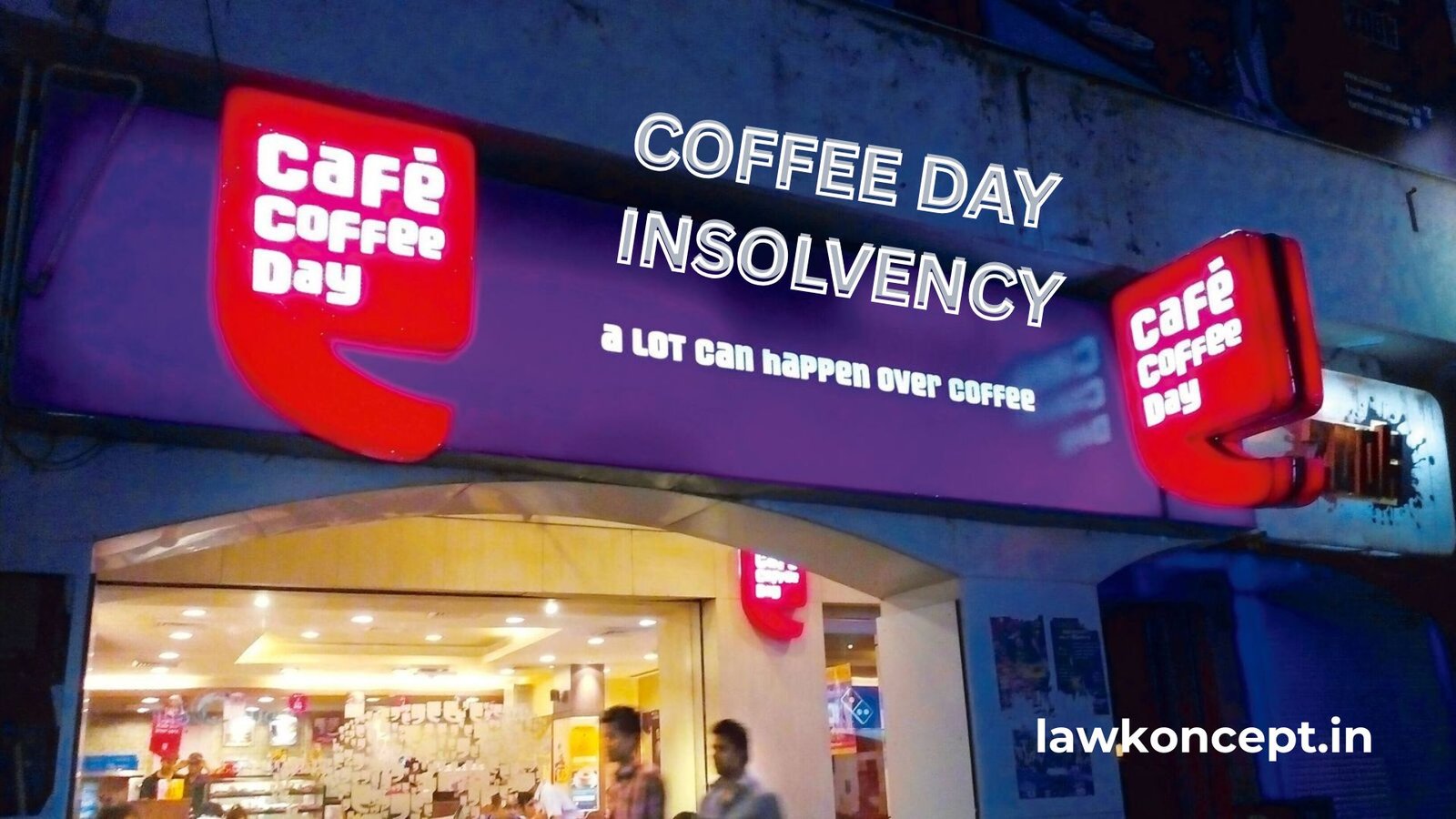
The National Company Law Appellate Tribunal (NCLAT), Chennai, on Thursday (February 27 2025) stayed insolvency proceedings against Cafe Coffee Day owner Coffee Day Enterprises Limited (CDEL). The Appellate Tribunal which had previously reserved its decision passed its order today, February 27 2025, a day later, a full copy of the order is awaited.
In a statement, the stock exchange company stated that it was pleased that the NCLAT accepted its appeal and issued it would accept the National Company Law Tribunal (NCLT) in its last decision of the year to initiate the bankruptcy proceedings.
V.G. Siddhartha’s his rise and the popularity of Cafe Coffee Day over the decades
The week before, Coffee Day Enterprises had announced that the process for resolution of corporate insolvency against it has been reopened starting on the 22nd of February, 2025 because the NCLAT did not give its decision on February 21 in accordance with the instructions from the Supreme Court.
This has come to us, after the National Companies Law Tribunal (NCLT) Bengaluru Bench, initiated insolvency against the firm on August 8 2024, after it filed a petition, via its creditor, IDBI Trusteeship Services Limited, after the company was accused for non payment of Rs 228 crore.
Following which, Malavika Hegde, who is the company’s director and shareholder sought a stay against the NCLT order and her plea was heard by the NCLAT in August 14 2024, after which IDBI Trusteeship then approached the Supreme court which ordered for NCLAT to decide pending February 21.
Since the appeal was not resolved until the 21st of February, stay order issued by NCLAT was struck down and the process for insolvency against the company recommenced according to the direction of the apex court.
__________________
The recent decision by the National Company Law Tribunal (NCLT) to begin bankruptcy proceedings for Coffee Day Enterprises Ltd (CDEL) raises significant questions about the management of financial and corporate governance within the business. The investigation report will look into the regulatory framework that governs corporations in India as well as the role played by different authorities, and the consequences of the NCLT’s decision.
Overview of the Case
On August 8, 2024, the Bengaluru court of the NCLT accepted a plea by IDBI Trusteeship Services Ltd (IDBITSL) against CDEL in the context of an insolvency amounting to Rs228.45 crore. This tribunal set up an interim resolution specialist (IRP) to supervise CDEL’s operations throughout the insolvency process. CDEL, which is the company that owns the Cafe Coffee Day chain, has been facing financial problems due to the death of the founder of the chain, V G Siddhartha, in July of this year.
Background of CDEL
CDEL has diverse operations that include the ownership of the resort and also providing consultancy services and the trading of coffee beans. The financial problems began when there were defaults on coupon payments for non-convertible debentures that could be redeemed (NCDs) in the months of September until June 2020. IDBITSL as trustee of debentures, issued an notice of the default in July 2020 and led to the present insolvency process.
Key Regulatory Authorities
Ministry of Corporate Affairs (MCA) – MCA deals with Corporate Governance in India as well as manages the operations of NCLT. It is responsible for carrying into effect of the Companies Act, 2013 and Insolvency and Bankruptcy Code (IBC) 2016.
National Company Law Tribunal (NCLT) – The National Company Law Tribunal(NCLT) was set up under section 409 of the Companies Act, 2013 and it deals with cases of insolvency and bankruptcy and has the authority to initiate Corporate Insolvency Resolution Processes (CIRP) by admitting CIRP applications and appointing an Insolvency Professional(IRP).
Insolvency and Bankruptcy Board of India (IBBI) – The IBBI regulates the insolvency profession and supervises the operation within the framework for insolvency in India.
Applicable Laws
Insolvency and Bankruptcy Code (IBC) 2016: This law provides an legal basis for the resolution of insolvency for India. It permits financial creditors, such as IDBITSL to institute CIRP against insolvent companies.
Companies Act, 2013: This law governs corporations in India with the provisions regarding the selection of trustees for debentures as well as the right of creditor.
The NCLT’s Ruling
The NCLT’s decision to accept the petition for insolvency was based on various crucial conclusions:
- Acknowledgment of the debt: CDEL’s annual report from FY20 until FY23 noted the non-payment of interest in the amount of Rs14.24 crore. This was an affirmation of debt.
- The authority in the case of IDBITSL: CDEL contested IDBITSL’s authority to file the insolvency request and claimed that it needed instructions from a majority holders of debentures. However the NCLT decided that IDBITSL as a trustee of debentures, was able to start the CIRP pursuant to the rules in the IBC.
- The application’s timeline: CDEL argued that the application was filed after the deadline specified in the agreement. The NCLT opposed this argument by saying that the acceptance of debt was not a limitation issue.
Implications of the Ruling
The process of bringing insolvency proceedings against CDEL has a variety of implications:
- Operational Control appointing of an IRP implies that the management of CDEL will be handed over to the person appointed by the IRP, who will be accountable for controlling the business’s operations during the process of insolvency.
- The impact on stakeholders: The ruling will affect a range of stakeholders, such as creditors, employees, as well as investors. This resolution procedure will decide how debts owed by the company will be resolved and whether or not it is possible to continue its operations.
- The precedent for future Cases This case sets precedent for the power of trustees for debentures and the recognition of debt in bankruptcy cases, which could influence similar cases in the near future.
The NCLT’s decision to commence the insolvency process towards Coffee Day Enterprises Ltd underscores the crucial role played by regulators in regulating the financial accountability and corporate governance in India. As the process of insolvency unfolds it is crucial to observe the actions of the IRP as well as the responses of the various stakeholders in the process. This incident serves as a reminder the challenges of corporate finance as well as the necessity of adhering to the regulations to ensure the longevity of business operations.
Strategic Asset Management to Revive CDEL’s Finances
Asset management companies can play an important role in solving the financial problems facing Coffee Day Enterprises Ltd (CDEL) through the implementation of strategies that are tailored to the needs of the business. Below is a detailed outline of the possible solutions firms that manage assets can provide to solve the issues facing CDEL.
Proposal for Asset Management Solutions for CDEL
- Financial Restructuring
Goal To stabilize the CDEL’s financial situation and restore confidence in investors.
Debt Restructuring: Contact creditors to negotiate terms for current debts, possibly converting certain debts into equity to ease financial burdens immediately.
Asset Liquidation: Find assets that are not performing or non-core for sale for cash generation. This may include selling subsidiaries, properties or other investments that don’t coincide with the business’s core strategy.
Equity Financing: Look into options to raise equity via the private placement or through public offering to improve the balance of the balance.
- Operational Efficiency Improvement
Objective: To improve the operational efficiency and decrease cost.
Cost Optimization Review thoroughly of your operational expenses in order to pinpoint ways to cut costs. Apply lean management techniques to improve efficiency.
Performance Monitoring: Set up the key performance indicators (KPIs) to periodically assess the effectiveness of operations and the financial condition. Use advanced analytics to track the performance of your organization in real-time.
Technology Integration: Make use of technologies to automatize processes, enhance data management and increase capability to make decisions.
- Investment Management
Goal: To optimize the investment portfolio while increasing return.
Portfolio Diversification: Review the investment portfolio to make sure it is adequately diversified across sectors, asset classes and geographic regions to minimize the risk of loss and boost the returns.
Active Management: Use strategies of active management to profit from opportunities in the market and to adjust your portfolio to reflect the changing market conditions.
Risk Management: Develop strong risk management systems to determine, evaluate and manage the financial risks that come with investing.
- Stakeholder Engagement
Goal: To restore trust and increase communication with all stakeholders.
Transparent reporting: Give periodic information to all stakeholders, including investors, creditors, as well as employees, regarding the financial health of the business and strategic goals.
Engagement Strategies: Create customized communication strategies to address the needs of stakeholders and keep them informed of changes in the restructuring process.
Investor Relations: Set up an investor relations department to handle communication with potential investors and shareholders and to build a positive relationship.
- Regulatory Compliance and Governance
Goal: To ensure that companies adhere to the requirements of regulatory agencies and enhance the corporate governance.
Compliance Framework: Review and improve compliance frameworks in order to conform to the standards of regulation set by the Ministry of Corporate Affairs and other authorities.
Best Practices for Corporate Governance: Improve corporate governance by setting up the board with an unofficial committee that will oversee the financial restructuring process and changes in operations.
Education and Training: Offer education for employees and managers on governance and compliance best methods to create an environment of accountability.
- Long-term Strategic Planning
Goal: To create a sustainable growth plan for CDEL.
Market Research: Do extensive market analysis to determine potential growth opportunities and emerging trends in the hospitality and coffee sector.
Strategic Partnerships: Look into partnership or cooperation with other companies to expand the reach of your business and improve the quality of services offered.
Sustainability Initiatives Integrate sustainability into the business model in order to attract eco-conscious consumers and investors and possibly create opportunities for new income streams.
Concluding
An asset management company can offer CDEL with a wide range of solutions that address its financial issues and help prepare for a long-term growth and recovery. Focusing on efficiency in operations as well as stakeholder involvement, investment management as well as regulatory compliance the strategic plan, CDEL can navigate its current challenges and emerge more resilient company. The implementation of these methods will involve cooperation with a range of stakeholders, such as investors, creditors and regulators, to ensure a coordinated and efficient strategy.
The report on the recent order of the National Company Law Tribunal (NCLT) to begin solutions to manage assets and insolvency to Coffee Day Enterprises Ltd (CDEL) by Syndicate Capital is designed to provide a thorough review of the possible solutions for the company’s financial problems. This report is intended for informational only and should not be considered to be financial advice. The recipients are advised to conduct their own research and consult financial advisors prior to making any decision. Syndicate Capital does not guarantee specific results or returns, and all strategies carry inherent risk.