
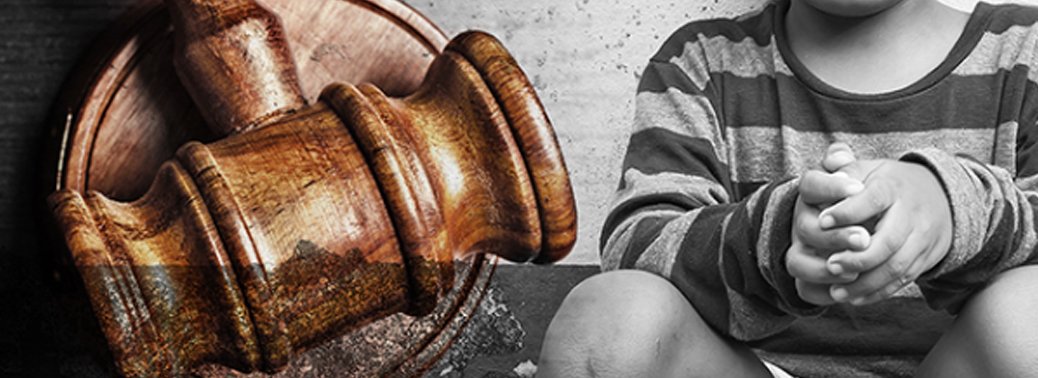
Each child has the potential to mature and realize their maximum potential, and contribute positively to the development of a society and the nation. It is a fact that the Constitution of India grants children the highest importance in their protection and well-being. It is the Juvenile Justice (Care and Protection of Children) Act, 2015 adopted by the Government of India takes a comprehensive approach to protecting the rights of children by ensuring appropriate treatment, protection, growth and treatment, as well as the social re-integration of children who are in a difficult situation through adopting a child – friendly approach.
Children are innocent from birth; however, due to many reasons, children often exhibit behaviors that are classified as criminal and are sometimes “in conflict with law”. These behaviors range from anger outbursts, minor crimes, substance abuse, aggressive or violent behaviors to more serious kinds of criminal acts. These behaviors are usually taught early in life. Parents as well as family members and others who take care of children can teach them how to manage their emotions without violence. Studies have shown that children absorb social norms through strong bonds with parents and other people, which shield against the impulsive behavior of children.
Child in conflict with Law:
“Child in Conflict with Law” is defined in Section 2(13) of the Juvenile Justice (Care & Protection of Children) Act, 2015 as a person who is believed or proven guilty of an offense and who is not 18 years of age at the date of committing the offense.
Offenders alleged to be committed by children
The Juvenile Justice System considers that a juvenile offenders is a victim of an poor circumstances and deserves an opportunity to start over his new life. The crimes may be committed without intention to commit a crime on certain occasions.
The child probably lacks foresight on the repercussions/consequences of his actions. It is generally accepted that children who commit crimes is not a person to be punished in proportion to the type of crime he/she committed, but must receive an individual treatment that is rehabilitative and is determined by the individual’s needs as well as his or her social and psychological background.
The National Crime Records Bureau (NCRB) is the sole national source for understanding the scale of Juvenile criminality in India.
In 2022, 30555 cases were recorded against juveniles, compared to 29,768 cases and 31,170 in 2019 and 2020 and 2020, respectively. Criminality among juveniles during 2022 was the highest Delhi (42.3) and was followed by Puducherry (29.6), Chandigarh (24.7), Chhattisgarh (24.2) and Dadar & Nagar Haveli and Daman & Diu (22.9). In terms of the nature of crimes the number of juveniles arrested was 7,879 for theft. 2651 were arrested in Burglary, 209 for Excise Act, 464 in the Narcotics Drugs and Psychotropic Substances Act as well as 666 in the Information Technology Act.
Kinds of Crimes committed by children
The various types of offenses committed by children when they are in conflicts with the law are identified in the JJ Act, 2015 as the following:
- Petty offence: Petty offenders are those where the maximum punishment in the Indian Penal Code or any other law in force is imprisonment for up to 3 years.
- Criminal Offenses of Serious Intent: Severe offenses are those that are punishable in the Indian Penal Code or any other law in force is the imprisonment of three to seven years.
3, Heinous Offences: Heinous offenses committed by children who are in conflicts with law are the offenses for which the maximum punishment in the Indian Penal Code or any other law at the time of in force is a sentence of the imprisonment of 7 years and more.
- Delinquency is characterized by different types of behavior or styles of behaviour. Each one of these patterns have their own social context, as well as the reasons that are thought to be responsible for bringing them about, and the types of treatment or prevention are typically suggested as the most appropriate to the particular kind of behavior being discussed.
Howard Becker (1966: 226 – 38) has mentioned four kinds of delinquencies:
- individual delinquency
- group-supported delinquency
- organized delinquency
- situational delinquency
i. Individual delinquency
It is a type of delinquency that is where one person is involved in the delinquent behavior and the reason lies within the of the delinquent. The most common explanations for the delinquent behavior are provided by psychiatrists. Their argument is that delinquency is cause d by psychological problems that primarily stem from defective/faulty/pathological family interaction patterns.
ii. Group-supported delinquency
Delinquencies of this kind are committed with other people and the root of the problem is not rooted in the character of the person or the family of the delinquent, but rather in the social and cultural environment of the person’s neighborhood and home. The research studies by Thrasher as well as Shaw and McKay refer to this type of delinquency. The research suggests that the majority of young people who become delinquent were a result of their connections and relationships with other children who were in the process of becoming delinquent. Contrary to the psychogenic explanations, this theory emphasizes what’s learned and where it comes from instead of the causes that may trigger the motivation to commit crimes.
iii. Organized delinquency
This is a term used to describe violations carried out by groups that are formalized. The study of these delinquencies began by the United States in the 1950s and the notion of “delinquent sub – culture” was formulated. The term refers to a rules and values that govern the conduct of members of a group to encourage the committing of delinquencies, which determine the status of these actions and provide the typical roles of those who are not in the groupings that are governed by the norms of the group.
iv. Situational delinquency
The three kinds of delinquencies all have one thing they have in the same. All three types of delinquency is seen as having deep roots. In the case of individual delinquency (according on the theory of psychogenic causes) the causes of delinquency are primarily within the person. In the case of group-based and organized delinquencies that are organized and supported (the the sociogenic reason) the root causes (of delinquency) are in the social structure and the emphasis is either on environmental areas in which delinquency is prevalent or on the way that social structure puts people in a disadvantageous standing to compete.
Situational delinquency provides a different perspective. to unlocking the secrets of human behavior it is assumed that delinquency isn’t deeply in the root, and that the motives behind delinquency as well as methods to control it can be quite straightforward. Young people engage in an act of delinquency with no commitment to delinquency due to lower levels of impulse control, or due to weaker the reinforcement of restraints from family members, and due to the fact that he has nothing to lose even in the event of being found guilty. David Matza is one scholar who studies this type of delinquency. But the notion of delinquency in a situation is not well-developed and does not have much significance in the issue of causation by delinquency. It’s a complement instead of a substitute for different types of delinquency.
A study conducted by Parackal Panicker and Panicker (2016) shows that the majority of adolescent criminal behavior is asymptomatic of the adolescence phase and won’t continue throughout adulthood. Just as a toddler grows out of temper tantrums, the majority of adolescents are able to overcome deviant behavior.
What can be done?
Teachers, parents as well as schools, communities as well as law enforcement authorities have to be aware of the risks that could lead children to take actions that could harm their own well-being and that of society at large and are categorized as in conflict with the law. There is ample evidence to support the right type of rehabilitation and prevention, most children can be reformed, adjusted and are able to return to the maturity of adulthood.
Therefore, it is crucial to recognize the risk factors, i.e. factors whose presence or early exposure increase the probability to engage in delinquency or other problems with behaviour (Reingle, Jennings, and Maldonado Molina 2012; Reingle, Jennings, and Maldonado Molina 2012 Mmari Blum and Teufel Mmari, Blum and Teufel Shone 2010,). The factors that protect are the ones that reduce the impact on risk-related factors. In recent years, research studies of juvenile delinquency and the justice system have been focusing on the effects the strengths (protective elements) on youth’s capacity to overcome obstacles and flourish.
In general, factors that protect such as attendance at school, a positive social orientation, or the ability to talk about problems with parents can act as an effective buffer to reduce or lessen the effects of risk factors as well as their capacity to cause the development of delinquent behavior.