Bar of Jurisdiction of Civil Courts

Bar of Jurisdiction of Civil Courts
The phrase “Ubi Jud Ibi Remedium” is “where there is a law, where is a remedy”. It is a basic rule of the law. Every person who is entitled has the right to bring suit before a court unless legal jurisdiction of the court is ruled to be ineffective. When the goal of the case is enforcement of … Read more
Section 9 of CPC

This article outlines and clarifies the scope and significance of civil lawsuits and the authority in India. This was done by using Section 9 of the Code of Civil Procedure as the central point of inquiry. The article outlines the crucial perspective of the section with the aid of various laws and precedents. It concludes … Read more

Jurisdiction of Civil Court Under CPC

Jurisdiction is the power of the judge to hear and decide on a matter. It is the fundamental rule of law that a judge can make a decision on any matter without having the authority to do so. The Code of Civil Procedure, 1908 (CPC) is a set of specific rules regarding the legal jurisdiction … Read more

Inherent Power of Court under CPC

inherent power of court under cpc

Inherent powers of the Code of Civil Procedure (hereinafter referred to CPC) which are primarily protected through Section 151, are courts have the inherent power to issue important orders. The purpose of these orders is to achieve what they call the “ends of justice” or stopping abuse of court processes. Particularly when certain CPC rules are not … Read more

Important Definitions Under CPC

Important definitions under CPC

A lot of lawyers are not aware of the real meanings of the many terms that are uses in court. Therefore, this article will clarify every key phrase that is frequently employed in the daily life of an advocate.   Code-Section 2(1) In this section, it is said the phrase “Code” includes rules. Explanation: Rules form … Read more

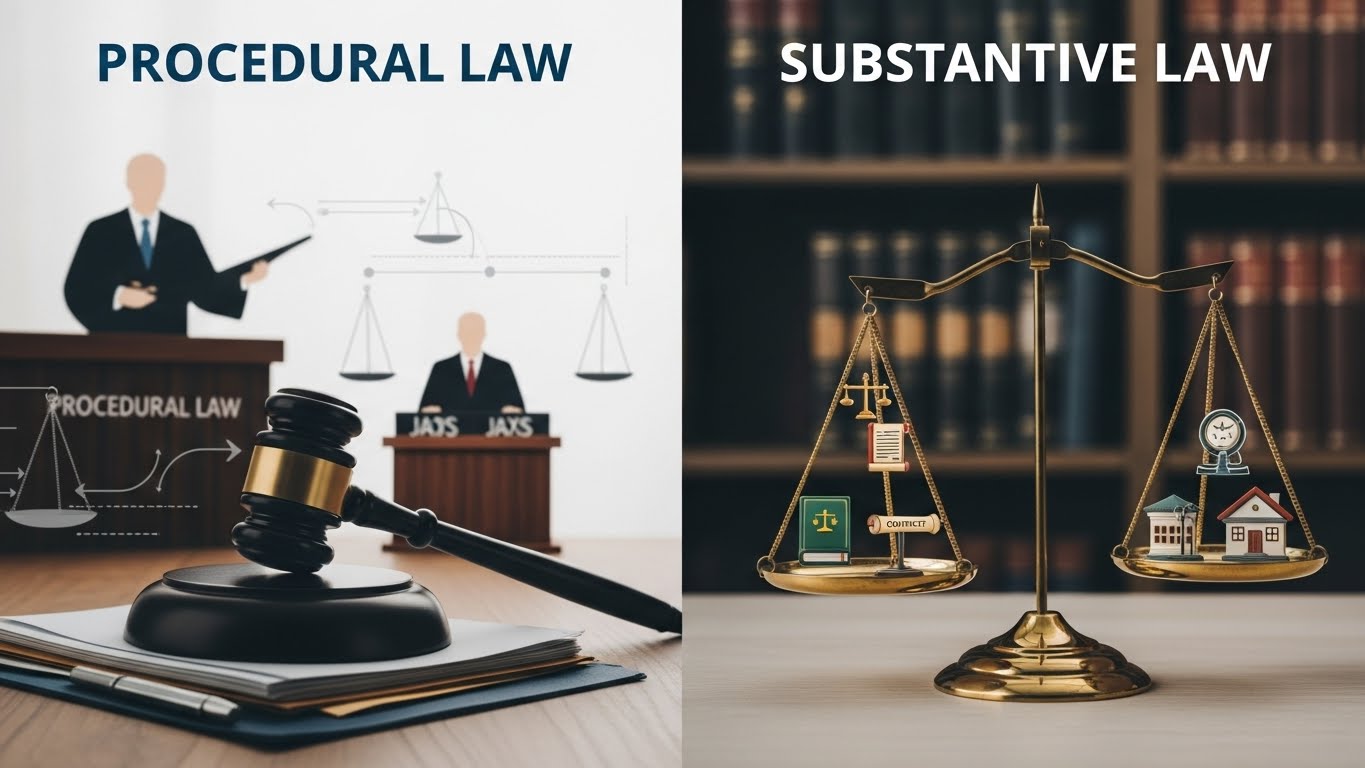
Difference Between Procedural Law and Substantive Law

Difference Between Procedural and Substantive Law

Every nation utilizes its own values to ensure the legal system within the borders of its territory. The laws are generally separated into two groups which are substantive law and procedural law. The laws that define individuals’ rights, obligations and obligations are referred to as substantive laws. The purpose in procedural law is safeguard the rights and … Read more

Meaning, Object and Nature of CPC

It is the fundamental procedural law of India which set the rules for civil courts in the course of settling or settling cases. It covers all stages of litigation, from the beginning of a case to the finalization of a judgment. It is a method of ensuring a consistent and consistent process for the handling of … Read more

Res Judicata

res judicata

Res Judicata Meaning “Res” means “subject matter,” and  “Judicata” means “adjudged” or “decided.”  So together they mean “Res” + “Judicata” = “a matter adjudged.”  Section 11 of the Code of Civil Procedure, 1908 (CPC), embodies the res judicata doctrine, also known as the rule of conclusiveness of a judgment. It stipulates that no party may … Read more

Execution Petition

  Execution Petition – is a legal document which is submitted in the court in order to enforce a judgment or order that has been delivered in favor of one party known as decree-holder against another party (the judgment-debtor). This process is defined as an ending or the last stage of the civil litigation. It … Read more

CCSU LLB – Civil Procedure Code (K-5001) – Dec 2023

p{font-size:17px;} .middle{text-align: center;font-weight:bold;line-height: 40px;} .line{line-height: 40px;} td,th{font-size:18px;} .cont{ display: grid; grid-template-columns: auto auto auto; padding: 10px; } .cont > .bx { background-color: #ffc6a3; border: 1px solid black; padding: 10px; font-size: 20px; text-align: center; } LLB 5th Semester Examination, December 2023 Civil Procedure Code (K-5001) Section A Note: Attempt all questions. Each question carries 4 marks … Read more