
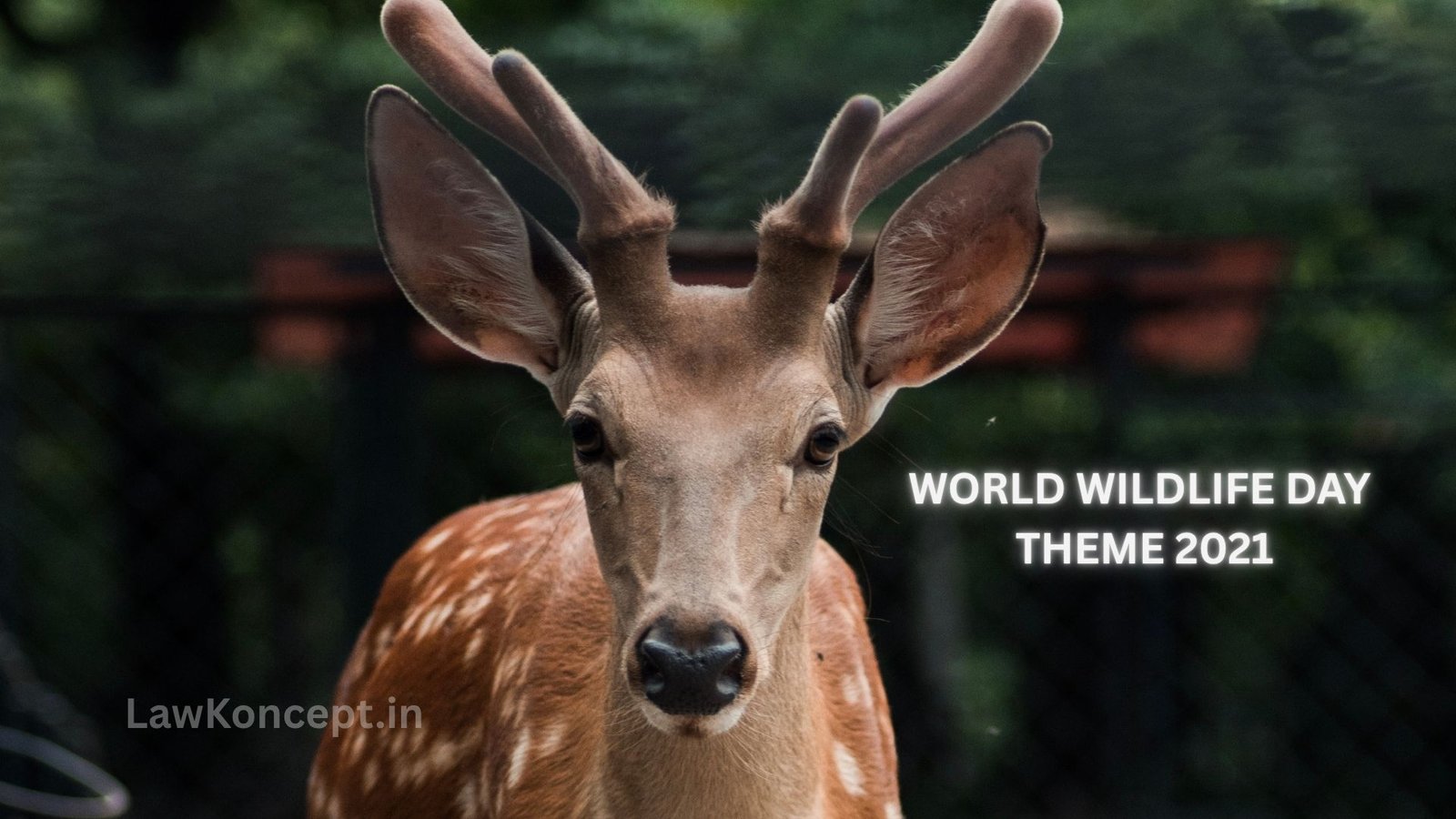
World Wildlife Day celebrates the amazing and varied species of wildlife and flora. It also aims to increase awareness of the many benefits their conservation brings to the people. While at the same time, World Wildlife Day reminds us of the need to accelerate the fight against human-caused wildlife crimes and diminution of species, which are a broad range of economic, environmental and social consequences.
In 2015 world nature day fell in world wildlife day 3 March the date upon which CITES (convention on international trade in endangered species of wild fauna and flora ) is in force in.
2021 Theme
The theme is Forest and Livelihoods: Sustaining People and Planet. It highlights how importance forest species of species and services that forest provide to life support of a greater part of the world including indigenous and local communities historically dependent on the forest and bordering on areas of land occupied by the forest that meet goals 1, 12,13,15 of the UN and with strong commit of ensuring proper distribution and usage of our land for ensuring that they continue to live and sustained life on earth for a prolonged period.
The 3rd March in 2021 is World Wildlife Day will celebrate forests-based livelihoods and increase awareness of forest and forest wildlife management strategies and practices which are compatible with human wellbeing as well as the long-term protection of forests, forest dwelling wildlife and plants, and the ecosystems that they support and highlight the importance of traditional practices and wisdom that help establish an ecologically sustainable connection with these essential ecosystems.
Film Festival
CITES has joined forces together with Jackson Wild and the United Nations Development Programme (UNDP) to put on an international film show that focuses on the enormous significance of our planet’s forests as well as their numerous ecosystem services and the thousands of human lives they support.
Importance of Wildlife and Forests
The plants and animals living in the wild are of intrinsic importance and contribute to ecological social, genetic economic, scientific and educational, as well as cultural aesthetic, and recreational aspects of human wellbeing and sustainable development.
Between 200 to 350 million people reside within or near forested areas across the globe, and depend on the numerous ecosystem services provided by forests and forest species to provide their daily lives as well as to satisfy the basic necessities which include shelter, food, energy, and medicines.
About 28percent of globe’s land area is controlled by indigenous peoples, which includes some of the best ecologically preserved forests in the world. These forests are not just important to their personal and economic well-being, but also their identities as cultural beings.
The forests, the species of trees and the livelihoods that are dependent on them are in the middle of the many global crises that we face today, ranging from climate change to biodiversity loss, and the social, health and economic repercussions of the COVID-19 pandemic.
Did you have any idea?
and building healthy habits are some details regarding forests from UN-REDD.
Wildlife Loss and Forest Degradation
According to WWF around 80 percent of all known land-based species are located in forests. When species leave their habitats in forests and habitats, they often are not able to survive on the sliver of forested space left. They are more easily accessible to poachers and hunters and their numbers start to decrease and eventually disappear. Deforestation in the local area can cause extinctions since a number of rare species are found in tiny geographical areas in the world.
Forests are also key players in the water and carbon cycles that enable life. When forests disappear or are destroyed, their loss causes a series of changes that affect the lives local and across the globe.
- More greenhouse gas emissions
- Water cycle disruption
- More soil erosion
- Disrupted livelihoods
- Role of Geneva
- International Geneva
Geneva and the area around it hosts important international organisations which work on forests and wildlife.
Convention on International Trade in Endangered Species of Wild Fauna and Flora (CITES)
CITES is a global agreement between the governments of different countries. Because trade in wildlife and plant species spans boundaries between nations The effort for regulation requires cooperation from all countries to protect certain species from being exploited to the point of extinction. CITES was established as a result of this cooperation to ensure that the international trade in wildlife and plant species do not endanger their existence. It currently grants different levels of protection to over 37,000 species of plants and animals regardless of whether they are sold in live animals, as fur coats, or dried plants.
International Union for Conservation of Nature (IUCN)
Since its inception in the year 1970 The IUCN’s Environmental Law Centre has provided professionals across the globe with legal assistance to fight poaching and illegal trade in wildlife. The IUCN estimates that around 29 percent of the 82,954 species that are as part of the IUCN Red List of Species Threatened are in danger of disappearing. If the loss of habitat and climate change are a major reason behind the alarming rate of extinction disturbance, illegal take and illegal killings are an increasing and significant threat on wild fauna and the flora. Environmental crime is now the fourth most significant crime at the global scale.
Furthermore to that, the IUCN is committed to building ecologically sustainable landscapes, preserve primary forests and improve the rights of communities living in forests. Through its forest-related initiatives IUCN supports countries in implementing sustainable forest policies. IUCN assists countries to implement effective land-use and forest policies to meet national goals and meet international commitments to combat biodiversity, climate change and land degradation.
United Nations Economic Commission for Europe (UNECE)
Joint UNECE/FAO Forestry and Timber Section provides support for evidence-based policy and sustainable forest management in the sub-region. It further endeavors to advance the many environmentally-beneficial products and services provided to people while supporting countries of the sub-region in the monitoring and managing forests.
UN Programme for Reducing Emissions due to Deforestation and Forest Degradation (UN-REDD)
Initiated in 2008, the UN-REDD Program brings together the convening authority and expertise of FAO, UNDP and UNEP to support country-led REDD+ processes and foster informed and effective stakeholder engagement – including from indigenous people and other forest-dependent communities – in the implementation of REDD+ at both international and national levels. UN-REDD also provides support for the readiness process in REDD+ initiatives of its 65 partner countries in Africa, Asia Pacific and Latin America.
United Nations Conference on Trade and Development (UNCTAD)
In 1996, UNCTAD launched the BioTrade Initiative in order to encourage the objectives stipulated within the Convention on Biological Diversity. BioTrade encompasses the collection and production, transformation and marketing of products and services obtained from native organisms’ biodiversity, under the terms of economic, social and environmental sustainability. This includes forest-dependence activities and livelihoods improvement for forest-dwellers and those living near forests.
WWF International
WWF has been tackling issues related to forests for over 50 years. It has aided in the establishment designated areas for protected zones. It has also assisted to move the sector of forest towards sustainable and transparent, and has been working all over the world to stop deforestation, assist in restoring forests, and put pledges to end deforestation into practice.
Earthworm Foundation
Earthworm Foundation, formerly known as The Forest Trust, works to protect the oceans and forests and empower the people who take care of our lands and provide our daily demands. Their initiatives make a difference in a world where forests are an endless source of raw materials and also a sanctuary for biodiversity. Communities see their rights protected and have opportunities to grow; and workers are considered productive partners, and agriculture becomes the tool to feed hungry people and ensure that our climate remains in a stable state.