
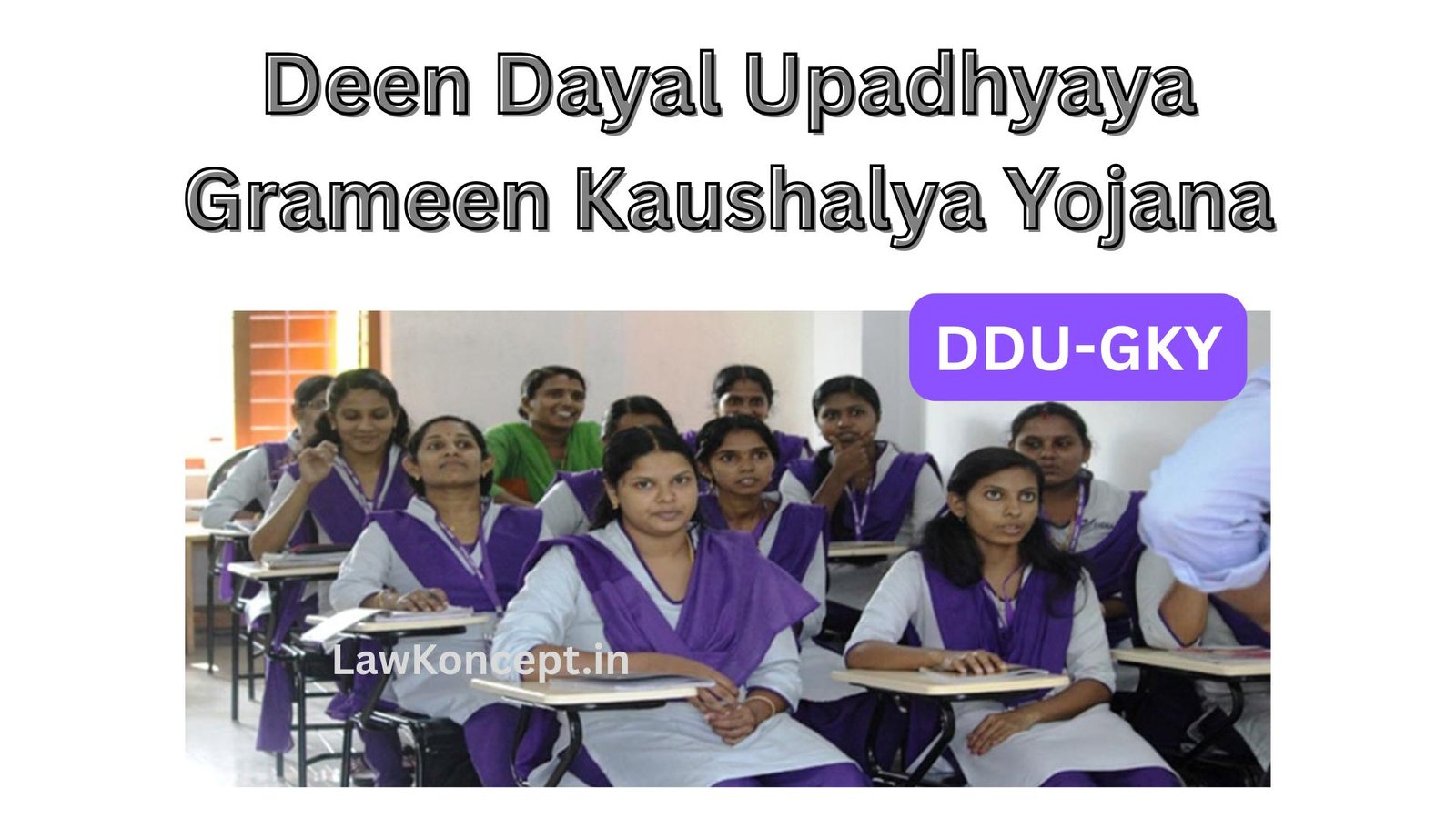
Deen Dayal upadhyaya Grameen Kaiushalya Yojana (DDU-GKY) is a centrally-funded scheme that was announced in 2014. It is part of National Rural Livelihood Mission (NRLM).
The two primary goals of the company are:
- Integrating diversity into the family incomes of poor rural families
- Aimed at the goals of career-oriented young people from rural areas
- The primary focus of the scheme is rural youth who are poor between the age of 15 to 35.
- It is a demand-driven skill training program that is linked to placement.
It also supports the economic and social initiatives of the government, including Digital India, Make in India, Smart Cities, Start-up India and Stand-up India within the Skill India campaign.
The rural youth of India are faced with a variety of challenges in their quest for an improved life due to the lack of formal education as well as the necessary qualifications. The DDU-GKY is attempting to close the gap through funding training initiatives that meet international standards, with a focus on retention, placement, advancement in career and placement in foreign countries.
The scheme falls under the Ministry of Rural Development, GOI.
The scheme has its origins back to the “Special Projects part of Swarnajayanti Gram Swarozgar Yojana (SGSY) in 2004. The scheme was redesigned and rebranded as DDU-GKY in the year 2014.
DDU-GKY Significance
In 2022, there will be an estimated gap in skills of 109.73 million across 24 major industries as outlined through the National Policy for Skill Development & Entrepreneurship 2015. Furthermore a FICCI as well as an Ernst & Young study (2013) found a gap of 47 million skilled people across the world in 2020. In light of this, and taking advantage of the dividend that demographics bring to India the country, there is huge possibility for India to develop its lowest of the pyramid (BoP) youth and put them into positions across the globe.
Deen Dayal Upadhyay Gramin Kaushal Yojana has played an important part with regard to Atmanirbhar Bharat, through the development of.
DDU-GKY in conjunction with integrated farm initiatives to support developing rural areas across the nation is essential for a greater chance of success in educating and putting into employment the rural youth in the right position.
DDU-GKY is a key player in assisting with economic and social initiatives, which are component in the Skill India program.
Look up other important schemes of the government to prepare for UPSC below:
- Pradhan Mantri SVANidhi Scheme SVAMITVA Scheme
- Make in India Pradhan Mantri Jeevan Jyoti Bima Yojana
- Deen Dayal Upadhyaya Gram Jyoti Yojana Pradhan Mantri Kaushal Vikas Yojana
DDU-GKY Latest Stats
The following table provides the most recent information available regarding the Deen Dayal Upadhyaya Grameen Kaushalya Yojana as reported by the government on the official website for the scheme.
- States/UTs in 27, States as well as 3 Union Territories
- Districts – 689
- Blocks – 7426
- Projects that are in process from 1822
- Associates – more than 717 [from more than 502 transactions in 50 industriesfrom over 502 trades across 50 industries
- Candidates who have been trained >11.18 Lakh
- Candidates selected in the range of >6.5 Lakh
What’s the DDU-GKY Process?
DDU-GKY provides private education and trainers to set up modern, well-equipped, and contemporary training centers.
The trained trainers at these centres provide specific skills training that is job-related, and train on how to use computers and tablets, speak English and other life skills.
After the completion of the training students receive assistance in locating.
Training is free for students, and they receive free textbooks, uniforms, tablets, and study aids.
For residence-based training facilities, meals and lodging are included at no expense. For non-residential training facilities transportation costs and a meal per day for each completed training session are provided for free.
DDU-GKY Eligibility
Rural youngsters between 15 to 35 are eligible to receive instruction under the program. There is an age limit of that extends to 45 years for women, people with disabilities and SC/ST disabled individuals. Candidates must have one of the following qualifications:
- BPL Card
- BPL PDS Card
- RSBY Card (Rashtriya Swasthya Bima Yojana)
- Family members should be member of a registered SHG within the village
- A family member can be a salaried worker in the framework of MGNREGA with the minimum requirement of 15 working days in the last 12 months.
Implementation Model
The scheme operates in the three-tier model.
In the top of the list is at the top of that is DDU-GKY National Unit at the Rural Development Ministry which acts as the policy-making, technical assistance and facilitation agent.
Below is below that is the DDU-GKY State Missions which provide assistance with implementation.
At the bottom are at the bottom are Project Implementing Agencies (PIAs) who implement the program through the placement and skilling projects.
What are Project Implementing Agencies (PIAs) in DDU-GKY?
The PIAs are the implementing agents of the scheme. They must meet the following conditions and eligibility requirements:
Registered under Indian Trust Acts or any State Society Registration Act or any State Cooperative Societies or Multi-State Cooperative Acts or the Companies Act 2013 or the Limited Liability Partnerships Act 2008 OR the Government or a semi-government entity at or semi-government organizations at the State and National level.
- Positive Net Worth at least 2 of the past 3 year’s financials (Not applicable to NSDC Partners).
- Existence as an operational legal entity in India for a period of more than 3 fiscal years (Not applicable to NSDC Partners).
- A turnover that is greater than 25 percent of total amount for the project.
- The first priority will be granted for financing to PIAs that offer the following services:
- Employment in the company itself
Foreign placement
Industry internships – Support for interns by industry with co-funding Champion Employers are those PIAs who can guarantee that they train and place at least 10,000 applicants in two years
Educational Institution of High Repute – Institutes that have minimum NAAC grade in the range of 3.5 or Community colleges that have UGC/AICTE funds who are willing to accept DDU-GKY initiatives For more information on government programs read the linked article.
Training Requirements
The courses that are offered for training cover different areas like healthcare, retail, hotel construction, automotive and leather, gems electrical, plumbing and many more.
In addition to trade-specific skills, further training must be given to improve employability as well as soft skills such as English language use as well as information technology.
Additionally, the training must follow the program and the standards prescribed by certain national organizations The most prominent of these is for instance, the National Council for Vocational Training and Sector Skills Councils.
DDU-GKY Salient Features
A few of the most important aspects that make up the system are listed below.
- Enable Poor and Marginalized to Access Benefits
- Inclusive Program Design
- Moving the focus from training to Career Progression
- Greater Support for Placed Candidates
- Proactive Approach to Build Placement Partnerships
- Enhancing the Capacity of Implementation Partners
Other Government Initiatives for Skill Development
ASEEM Portal – Atmanirbhar Skilled Employer Mapping – designed to aid skilled workers in finding sustainable employment opportunities. It was established through MSDE Ministry of Skill Development and Entrepreneurship (MSDE) in the year 2020 in order to create opportunities for migrants returning to their work place following an outbreak caused by the coronavirus.
Pradhan Mantri Kaushal Vikas Yojana (PMKVY) is an Skill Certification Scheme that is designed to inspire the youth in the country to seek out training that is relevant to industry and also to ensure a secure income for those who are unable to work.
Sankalp and Strive Scheme – is in the process of being put into place to meet the long-standing need for a national framework for promoting convergence, controlling the process of skill development, accelerating industrial efforts in the vocational education space, and ensuring efficient governance.
National Skill Development Mission – created to create convergence across sectors and States regarding actions related to the training of skills. The mission in addition to consolidating and coordination of skilling efforts, speed up the process of making decisions across different sectors in order to ensure high-quality skilling on a massive scale.
The Scheme to Higher Education Youth in Apprenticeship and Skills (SHREYAS) – to provide opportunities for apprenticeship in the industry to general graduates in order to increase the job prospects of Indian young people by providing on the job ‘ work experience as well as earning a stipend.
Q 1. What is the aim of DDU-GKY?
Ans. DDU-GKY also known as Deen Dayal Urpadhyaya Grameen Kaushalya Yojana was established in order to bring diversification in the income of rural families in need and fulfill the dreams of career of rural youngsters.
Q 2. What year was DDU-GKY created?
Ans. Deen Dayal Upadhyayagrameen Kaushalya Yojana (also known as the “central government”) program which was first introduced in the year 2014.