
In a nation as vast and diverse as India dealing with socio-economic issues is a huge job. While NGOs and government schemes play their part, actual change is often at the level of the people. On this post, we go over the following topics:
The Essence of Self Help Groups
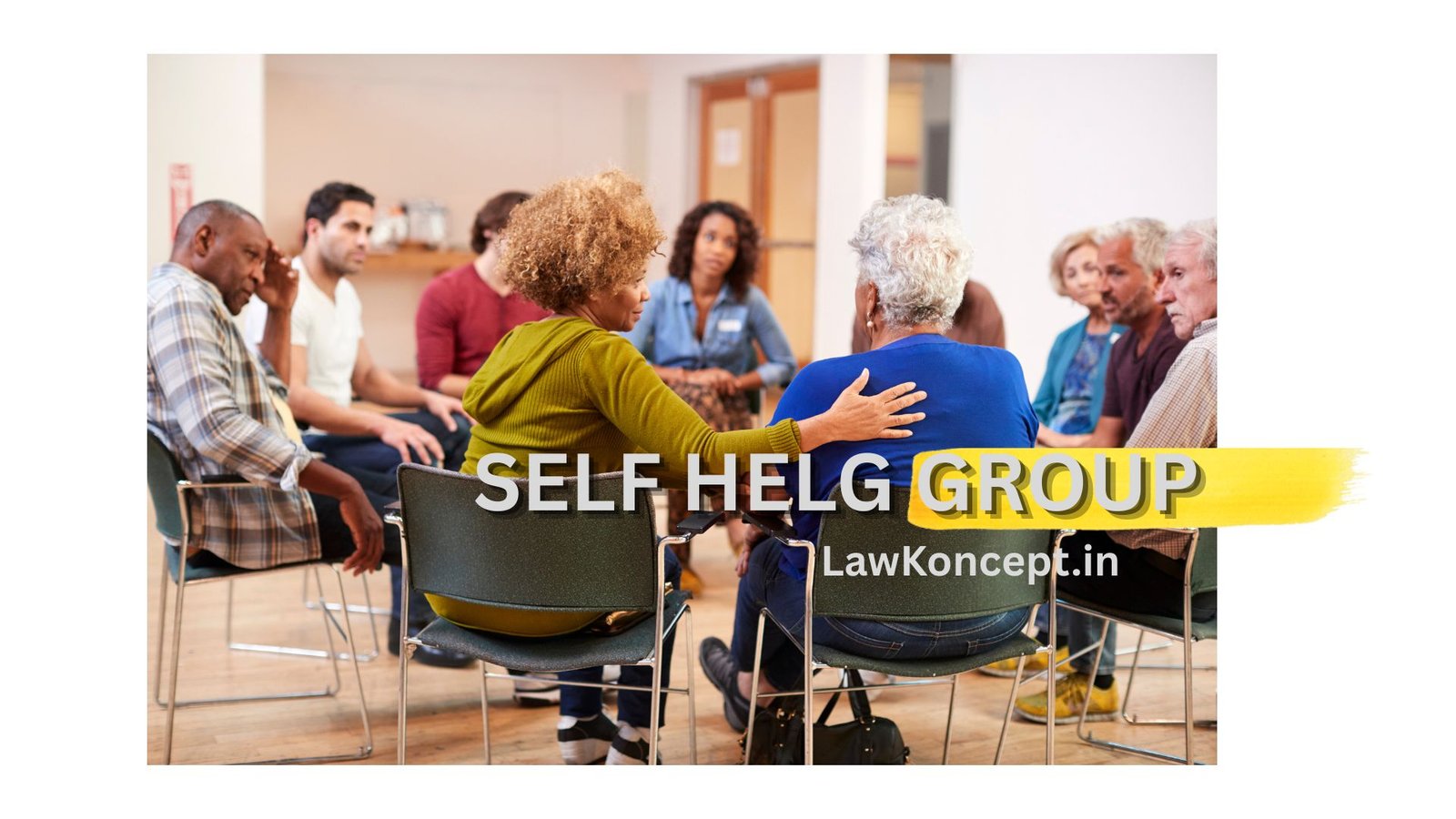
Self-Help Groups (SHGs) are small and voluntary groups of people, usually with similar socio-economic backgrounds. They meet weekly and pool small amounts of money, chatting about local issues, and coordinating actions together.
In in 2020 India hosts more than 12 million SHGs that’s about 100 million family members. They’re not just numbers; they’re evidence of the transformational potential that collective actions can bring about.
The History of Self Help Groups in India
The idea of SHGs doesn’t come from a new idea. Its roots go back to co-operative movements that were prevalent in the early 20th century.
1950s-1960s: The Co-operative Movement
Co-operative societies were amongst the first types of collective financial activities in India that laid the foundation for the future community-based initiatives.
1970s: The Birth of Informal Groups
Credit groups and informal savings started to emerge, particularly in the southern part of India as a means for communities to pool their resources.
1980s: The MYRADA Influence
MYRADA is an NGO that began promoting saving and credit groupings in Karnataka and later developed to become the SHG model that we have today.
1992: NABARD’s SHG-Bank Linkage Program
NABARD (National Bank of Rural and Agricultural Development) has launched the SHG-Bank Linkage Program in order to connect SHGs to banks that are formal to improve financial access and inclusion.
1999: Introduction of SGSY
The Swarnajayanti Gram Swrozgar Yojana (SGSY) has been established in the Indian government in order to encourage the creation of income for SHGs.
Early 2000s: Focus on Women Empowerment
SHGs started to concentrate more on empowerment of women and empowerment, which led to the creation of women-centric SHGs across nation.
2007: NRLM Framework
The National Rural Livelihoods Mission (NRLM) was established to provide an institutional structure to support SHGs and promoting the development of skills and job creation.
2011: Launch of Aajeevika
Aajeevika is a sub-scheme of NRLM was established to improve the lives of SHG members by enhancing connection to markets and the development of skill.
2015: Digital Financial Services
Digital financial services are now available for SHGs, which makes financial transactions more efficient and transparent.
2018: Expansion to Urban Areas
The National Urban Livelihoods Mission (NULM) was established to duplicate the SHG model in urban environments.
2020: COVID-19 and SHGs
SHGs played an important role in the COVID-19 epidemic, from creating masks and sanitizers, to spreading awareness of the health precautions.
2021: Focus on Sustainable Livelihoods
Recent initiatives are aiming to connect SHGs with sustainable farming practices and livelihoods that are climate resilient.
SHGs don’t stay static, they change. Once they’re stable, they shift towards investment and loans. The last stage is the diversification into social enterprises and social enterprises, which 60 percent of SHGs achieve at the age of five within 5 years from their formation.
The SHG model that is being used in India has gained admirers across the globe and many countries are looking into the possibility of replicating the framework. It is interesting to note that this SHG model has also been incorporated into the curriculum of universities, demonstrating its value in community development as well as financial integration.
The Multifaceted Functions of SHGs
Although credit and savings activities are the foundation of SHGs However, their work isn’t limited to finance. They also participate in the development of skills and social welfare programs. In reality SHGs have accumulated more than 2 billion dollars in savings by 2020. However they’ve evolved into an avenue for education, healthcare and even political involvement.
Apart from their finances SHGs have also branched out into community policing in certain regions. SHG members SHGs typically serve in the role of the eye and ears for the local community assisting to keep peace and order. This role of a supplementary one emphasizes the many facets of use for SHGs in contemporary India.
Why are SHGs Necessary?
Why are we requiring SHGs if we already also have financial institutions like banks? The reason lies in the accessibility. The majority of the Indian population has no access to financial services that are formal. SHGs can fill this gap particularly in rural areas. They act as a bridge between traditional financial institutions.
SHGs are able to benefit from a distinct advantage of local knowledge, something banks typically lack. SHGs can offer micro-credits on reasonable rates and with terms that are tailored to the needs of the community. This focus on community makes SHGs an essential instrument to help rural development.
Advantages and Impact of SHGs
The benefits of SHGs are numerous. Financial inclusion is only the beginning of the list. Women’s empowerment is a key component of SHG as well as skill development and building communities. Women comprise more than 80 percent of SHG members in India which means they gain not just financial independence, but as well a voice within their communities.
The importance of SHGs in disaster management must not be undervalued. In areas that are susceptible to natural disasters, SHGs have been pivotal in coordinating local disaster relief, providing another dimension to their broad impact.
Challenges Faced by SHGs
However, it’sn’t all smooth sailing. SHGs have challenges, such as the lack of education among their members, poor management practices and limited accessibility to market. The SHGs that are only 20% have access to markets for their product which is a gap that has to be addressed to ensure sustainable growth.
Another problem that SHGs are faced with are the challenges of digital integration. As the world shifts towards digital transactions inaccessibility to technology and knowledge can pose an obstacle for SHGs, especially those living in remote regions.
SHGs Across the India
There are more than 22,000 SHGs that are solely focused on organic farming, which is a segment that is a niche but one that is growing.
Some notable examples are the following:
Lijjat Papad – Maharashtra
Focus: Women Empowerment, Food Processing
Impact: Established by women from seven different countries in the year 1959, Lijjat Papad has now been a household name. It helps women become empowered by providing women with opportunities to work in the making of papad.
Lijjat Papad Case Study – Complete Story
Kudumbashree – Kerala
Focus: Women Empowerment, Microfinance, Agriculture
The impact: Kudumbashree is one of the most significant women-empowering programs in India. It has helped lift thousands of women by offering them income-generating opportunities.
Kudumbashree Groups Case Study – Complete Story
SEWA (Self Employed Women’s Association)
Focus: Women Empowerment, Labor Rights
The impact: SEWA has been instrumental in organising women within the non-traditional sector. It is home to over 1.9 million registered members, and it has been the standard for collective bargaining.
In addition to the ones listed above, there are other SHGs that are focused on sustainable energy options such as solar lanterns, cooking stoves and so on. These are aimed at improving not just living standards but helping to ensure sustainability for the environment.
SEWA Case study full story
The tale of Self Help Groups (SHGs) in India is awe-inspiring and demonstrates the strength of community-based organizations. As we head into an era where sustainable development and empowerment of local communities are the key and important, the role of SHGs will continue to change as they adapt, expand, and grow. Through digital inclusion or connecting to global markets SHGs are here to remain, and will continue to shape the socio-economic landscape of India.