
INTRODUCTION-
Urbanization is an excellent concept that is crucial to the growth of any country. It is the notion of urbanizing areas that are remote by creating infrastructure that creates the development. It is often thought of as be a positive thing, but one of the major reasons for pollution is urbanization. As people began to build cities, industrialization started to happen. This is why the amount of pollution grew. The main issue of our time is environmental pollution that our society needs to tackle immediately. The environmental degradation has become the biggest challenge facing humanity. In recent years the population of the rural areas is increasingly moving to cities as they are drawn by the comfortable lifestyles of the urban populace. But we’re not able to deal with problems like the absence of basic amenities such as medical care, education or electricity, and communication across the various regions of our country.
THE UNDERLYING ISSUE-
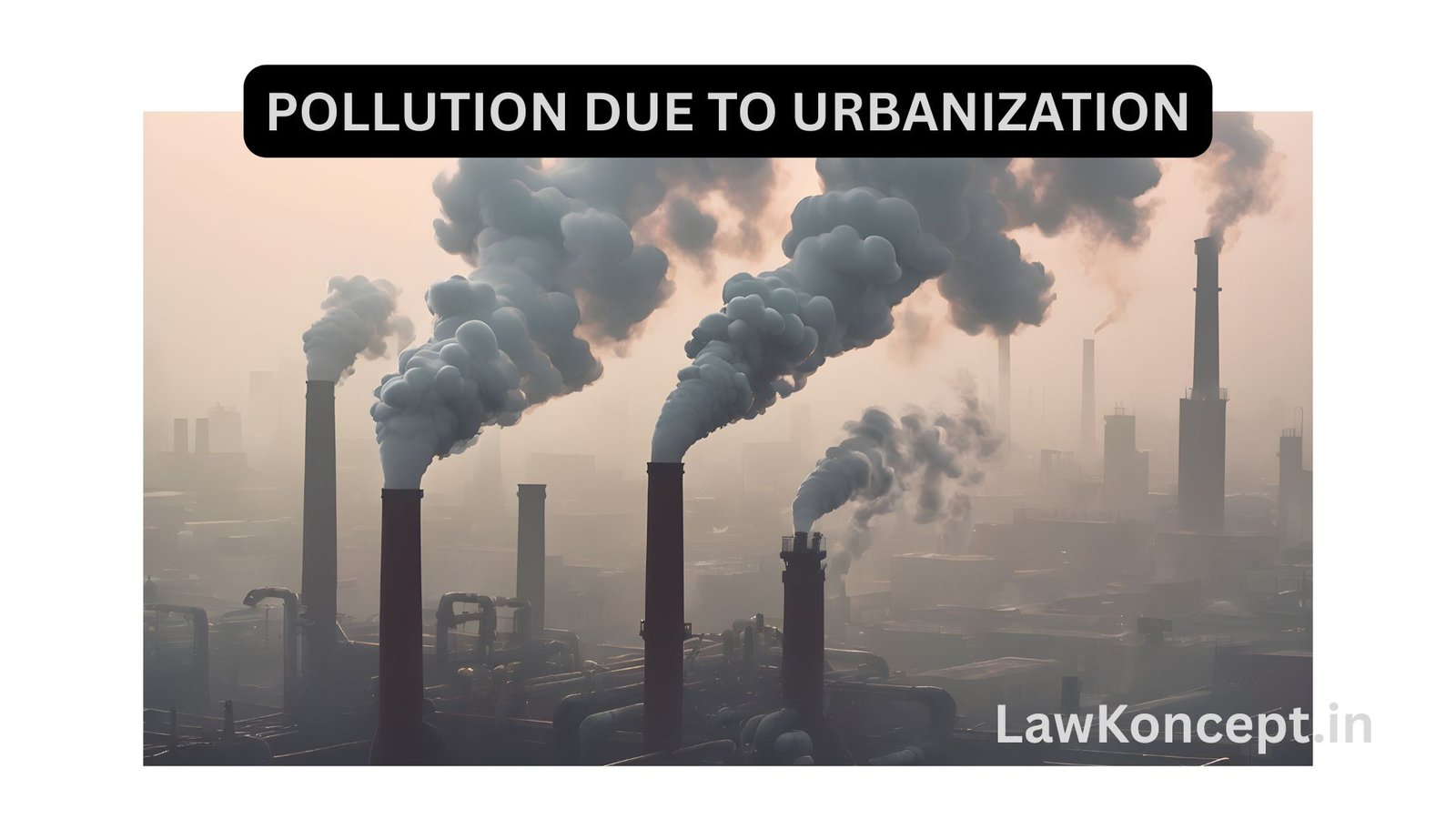
As a result of urbanization, businesses and factories are popping up in a variety of locations and the number of cars on the roads are rising. The emissions of gases and dust from vehicles and factories pollute the air, creating a variety of pollution. The days of old are gone when children could play in the streets and birds could fly in the sky. Because of the environmental urbanization-related pollution the calming scene is seldom found in urban settings nowadays. The air that is circulating in cities is polluted by the harmful emissions and smoke released from factories and vehicles. In addition, industrial and household wastes are thrown into bodies of water, making them unfit to consume and use. Trees are also still being cut today for housing, and the amount of cultivationable land is declining.
Another aspect that is affecting the environment and climate is the notion that of Urban Heat Island. “Rapid urbanization has resulted in the development of blacktop and concrete roads. Nearly 85 percent of the urban space is covered by concrete structures and roads made of metal. This traps solar energy, resulting in the formation the Urban Heat Island (UHI) the phenomenon.” Professor. Hema Malini from the Department of Geography, AU.
As we witness a rapid rise in population, we are witnessing an alarming rise of pollution as well as a result of which a variety of illnesses are spreading through the cities. Pollution from the environment has become the most significant issue in cities, making the city life miserable. Urbanization is viewed as the sign of growth which is why we believe that it is the optimal for us. However, it is equally essential to take care of the problems of pollution in order to fully enjoy the benefits of urbanisation. This is a an excellent step forward for any nation an ideal and primary aim for every nation.
TYPES OF ENVIRONMENTAL POLLUTION-
Our modern society is heavily dependent on fossil fuels for sources of energy to power modern infrastructure. The burning of fossil fuels and other polluting sources not just negatively impacts the planet but also has a negative impact to our physical and mental well-being.
Many people are familiar with the most basic kinds of pollution like air and water, soil and noise. But do you know the various sources that are causing environmental pollution? Here’s an overview of the different types of pollutants and how they influence our environment.
#airpollution
Air pollution: The city’s air is continuously affected by gases produced by burning fossil fuels, exhaust fumes from vehicles factories, power generators, and harmful fumes emitted by chemical substances like plastic, paint, as well as toxic spills. All of these substances disrupt the natural air’s composition and make it hazardous to our health. Maintaining the quality of air at the safest amount is among the most important challenges faced by our urbanized communities of today.
#waterpollution
Water pollution: Water resources like rivers, lakes, groundwater and oceans are contaminated by runoff from farms, factories chemical spills, car exhaust raw sewage, industrial waste and household waste being carried away by the rain and mixed with water resources.
#soilpullution
Soil pollution: A high concentrations of toxic elements found in soil could be a risk to the health of humans and the environment. Many organic and inorganic chemicals as well as products from farms, factories and construction sites, vehicles and homes can cause soil pollution.
#noisepollution
Noise pollution The effects of living in noisy environments can cause health risks that many of us are aware. In addition to the immediate effects of noise, and the disturbance of peace, the high levels of noise pollution can also be irritating which can cause headaches, insomnia hearing loss and can also affect the quality of life in the affected region.
#radioactivepollution
Radioactive pollution: Even though the presence of radioactivity in many chemicals is uncommon, it can have negative effects for our health. Radioactivity exposure can cause death and have irreparable environmental effects. Accidents at nuclear power plants leakage, accidents, and inefficient procedures like inadequate disposal of nuclear waste as well as mining for uranium are the primary factors that contribute to radioactive pollution. There are strict rules set by the government for controlling radioactive pollution and you must take additional precautions whenever you encounter zones in which a nuclear power project is situated.
#visualpollution
Visual pollution Cities are usually filled with advertisements, signs and billboards that are overly illuminated which are usually unattractive and cause an eye-sore. Visual pollution can also reduce or harm the quality of life and property values.
#thermalpollution
Thermal pollution: A large quantity of heat and heat trapped in the earth’s atmosphere could create negative consequences for our environment. When the natural cycles of Earth’s temperature are disrupted over a lengthy time period, there are increases of forest fires as well as a melting of the polar ice cap as well as sea level rise shifts. This can affect the ocean and wind currents, which can cause more risks to our environment and health.
CONCLUSION-
All people in the globe must have access to quality healthcare education, sanitation, nutrition and security and urbanisation is the way we can assist in achieving this objective. In the course of achieving this goal, it is important to not ignore the fact that pollution from urbanisation can harm our environment more, and is extremely hazardous for the earth and, consequently, every species on Earth over the long term.
Urbanization comes with a number of negative elements, however the challenges that arise because of urbanization could be addressed through the development or the establishment of guidelines or policies of the government that will stop these issues resulting from the increasing urbanization.
As an example an increase in the amount of clean public transportation services at affordable costs could raise the need for public transportation. In addition, the consumption of fuel as well as noise and air pollution can be controlled by this method. Additionally, traffic congestion could be cured by creating the infrastructure for transportation facilities. Nowadays, we have alternatives to electric vehicles, which means we could work on something like it.