
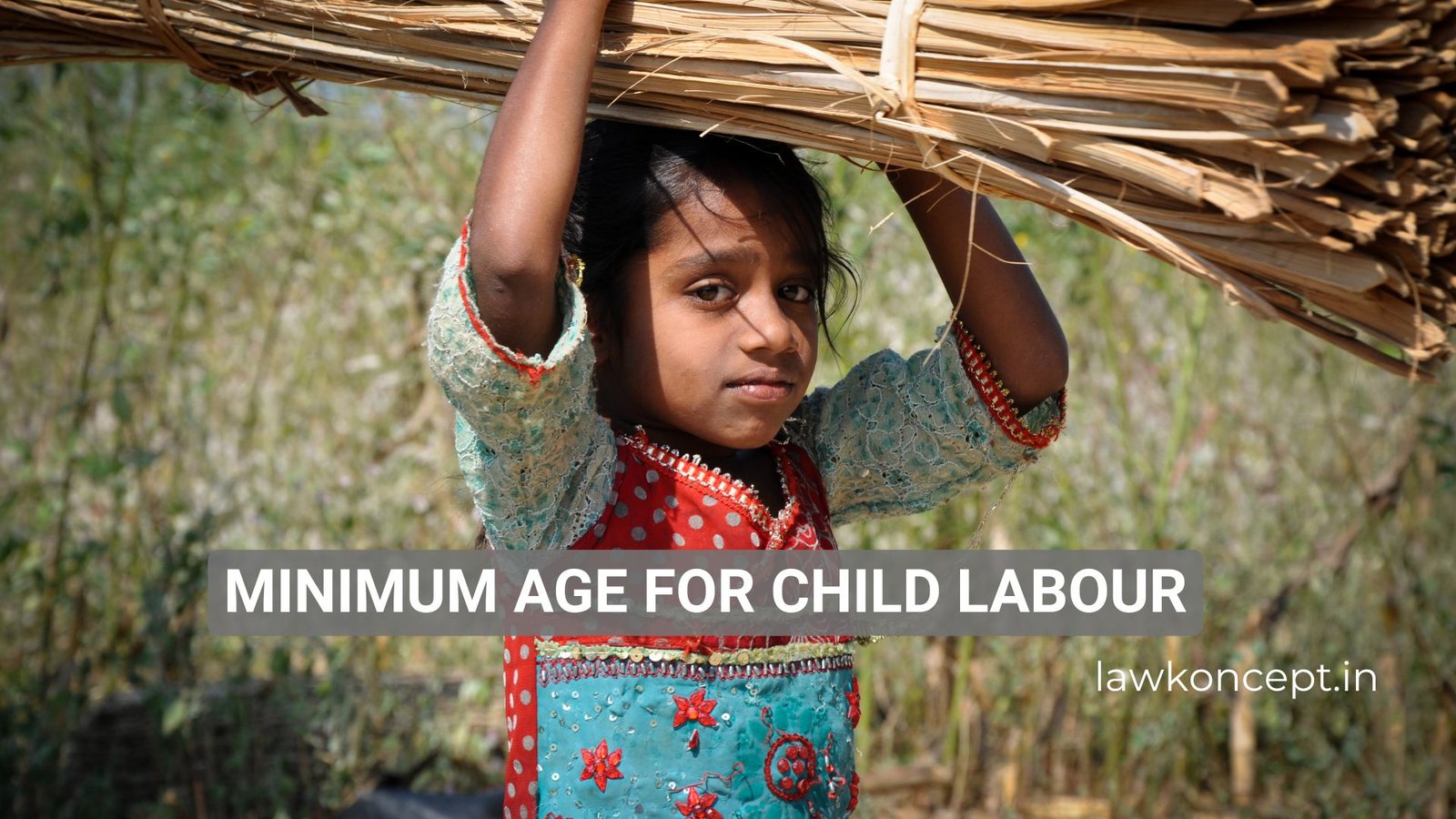
Child Labour Law and Regulations in India
Children are deprived of their childhood and can be detrimental to their mental and physical development. The government provides an education for all kids at no cost, and has taken a number of measures to stop child labour in India. But, child labor is still a problem across India because of the poverty of people, a lack of schools, and the expansion that is the informal sector.
If all entrepreneurs across the country choose to eliminate child labor and assist the needy children get education throughout their formative years, a healthy and prosperous India can be developed. “Knowledge will set you free” This article will present an introduction to the laws as well as the rules and regulations for the issue of child labor in India. Find out the details on Labour Laws & Rights in India:
- Equal Pay Act
- Workplace Harassment Prevention
- Maternity Benefits
Legal Age for Working in India
Children who are under 14 years old for any type of work, except for certain family-related work is a crime that can be prosecuted and could result in a prison sentence that can be up to 2 years. Teenagers aged 14-18 years are not able to be employed in any dangerous job. In the Child Labour (Prohibition and Regulation) Amendment Bill, 2012 the parents of the working child who is underage can be penalized, too.
Children younger than 14 years of Age
Children younger than 14 are not eligible to be employed or allowed to engage in any job or in any process. This restriction does not apply if the child assists his/her family or a family enterprise (which isn’t a risky job) in the evenings after school hours or on vacation. Family members in relation to a child refers to his/her father or mother, brother, sister and father’s daughter, as well as siblings and mothers’ sister and brother.
A child who is under the age of 14 can be employed for a living in the field of audio-visual entertainment which includes commercials film, television serials, as well as any other sports or entertainment activities, with the exception of circus subject to certain the conditions and safety precautions.
Adolescents – 14 to 18 Years of Age
The Child Labour (Prevention and Regulation) Amendment Act permits adolescents to be employed in non-hazardous jobs and procedures. If a teen is employed by an employer, the following conditions have to be met from the company:
- The work hours on each day should be determined so that no time or duration will exceed three hours.
- The teenager must be allowed an opportunity to relaxation for at least an hour after having worked for three hours.
- The total amount of work time by an adolescent should not exceed six hours per day, not including period of waiting for work.
- Adolescents are not eligible to work during the hours from 7 pm to 8 am.
- Adolescents shouldn’t be forced to work over the clock.
- Adolescents are not allowed to be employed for more than one place in any one time.
- Adolescents need to be given each week, with a day of rest for one full day.
- Rules for Employing Adolescents
- Employers who employ adolescents must keep a record of the following details:
- Name and birth date of every child be able to work.
- Periods of work and hours of an adolescent, as well as the time intervals for rest to which an adolescent is entitled.
The work ethic of any young adult.
Alongside the list, when employing or allowing an adolescent perform work at an establishment proprietor of the establishment is required to provide the Local Inspector these details within 30 days of the date:
- Name and location that the place is located in.
- Person’s name who is in the actual control for the institution.
- Address where communications related to the establishment need to be addressed.
- The nature of the job or procedure that is being carried out within the institution.
Punishment for Violation of Child Labour Laws
Anyone who hires children or allows any child to perform work that is contrary of the Children and Adolescent Labor (Prohibition and Regulation) Act is liable to prison for a time that will not be less than 6 months, but that could be extended up to two years. Along with imprisonment the employer could also be penalized with a fine of Rs.20,000 up to Rs.50,000.
National Policy on Child Labour
Policy
The National Policy on Child Labour August 1987, contains the action plan to tackle the issue of child labor. It outlines:
- The legislative plan of action
- Concentration and convergence of general developmental programmes the benefit of children whenever feasible and
- Action plan based on project to launch projects for the protection of children who work in areas with a high concentration of child labor.
As a result of the National Child Labour Policy, the NCLP Scheme was established in 1988 to assist children with rehabilitation labor. The Scheme aims to take an approach that is sequential, with a focus on the rehabilitation of children who work in dangerous occupations and processes initially. The Scheme states that after an investigation of child labour involved in hazardous occupations and processes has been completed and the results have been analyzed, children are removed from these occupations and processes and placed into special schools for them to be integrated into a formal education.
Legislative Action Plan for the strict implementation of the Child Labour Act and other labor laws in order to make sure that kids are not placed in dangerous jobs and that the work conditions of children in areas that are not hazardous are controlled according to the requirements that are in place under the Child Labour Act. The plan also includes the further recognition of other occupations and procedures that are harmful to the safety and health of children.
Government has therefore been taking proactive steps to address the issue through strict implementation of legislative provisions with rehabilitation measures that are simultaneously implemented. State Governments, who are the proper responsible authorities for implementation are regularly conducting inspections and raids in order to find instances of infringement. Because poverty is the main source of the problem and a lack of enforcement can’t resolve it, the government has placed much importance on the rehabilitation of children and on improving the economic situation that their parents have.
Right to Education Bill
In 2009 India’s government India took a step with immense consequences by introducing the Right to Education Bill. Implementation of the Act at a grassroots level is crucial to the removal of the issue of child labor that has affected India for a long time.
Rehabilitation of Children Working in Hazardous Occupations
In the year 2000, India’s government India has launched a massive program to stop child labour in dangerous jobs, and to help them rehabilitate themselves by establishing special schools specifically for the children. In the course of the program, 2 million children will be removed from work and placed in special schools in which they receive educational, vocational training and stipends for each month, nutritional and health checks.
List of Hazardous Occupations & Process
Hazardous Occupations
- The transport of goods, passengers or mails via railways
- The picking of cinder and clearing an ash pit or constructing construction
- A job in a restaurant in a railway station which involves the transportation of a vendor or other employees in the company from one platform to the next or inside and out of train
- Construction work of railway stations, or in any other job in which the work is carried out within close proximity to or between railway lines
- A port authority within the bounds of any port
- Work in relation to the selling of fireworks and crackers in stores with temporary permits
- Abattoirs/Slaughter House
- Garages and workshops for automobiles
- Foundries
- handling of inflammable or toxic substances or explosives
- Handloom and power loom industries
- Mines (underground and submerged) and collieries
- Workshops for fibreglass and plastic units
- Domestic workers, servants, and
- Dhabas (roadside eating establishments) Restaurants and hotels motels, tea shop, tea restaurants and resorts. Spas, resorts and other centres for recreation.
- Diving
- Caring of Elephant
- Participating in circuses
Processes
- Beedi-making
- Carpet-weaving
- carpet weaving that includes preparatory as well as an incidental process.
- The production of cement, which includes the packaging of cement
- Dyeing, printing and weaving
- dyeing, printing on cloth and weaving, including the processes that are that are preparatory and related to.
- Production of explosives, matches and fire-works
- Mica-cutting and cutting and
- Shellac manufacture
- Soap manufacturer
- Tanning
- Wool-cleaning
- Construction and building industry
- Building and Construction Industry including polishing and processing of granite stones
- Manufacturing of slate pencils (including packaging)
- * Manufacturing of products using the agate
- * Manufacturing processes that make use of harmful metals and chemicals like mercury, lead manganese, chromium pesticides, benzene and cadmium and asbestos
- # “Hazardous processes” as defined in Section. 2. (cb) and “dangerous operation’ as outlined in the rules issued pursuant to section 87 of the Factories Act, 1948 (63 of 1948)
- # Printing as defined by the Section 2(k) (iv) (iv) of the Factories Act, 1948 (63 of 1948)
- # Descaling of cashewnuts, cashews and processing
- # Soldering techniques in the electronic industry
- $ ‘Aggarbatti’ production
- Automotive repairs and maintenance, as well as the processes that are related to it, namely welding lathe work, dents beating, and painting
- Tiles, bricks, and roof units
- Processing and ginning of cotton as well as manufacturing of hosiery items
- Manufacturing of detergents
- Workshops for the fabrication of materials (ferrous as well as non-ferrous)
- Cutting and polishing of gemstones
- Handling of manganese and chromite Ores
- Coir manufacturing
- Lime Kilns and Manufacture of Lime
- Lock Making
- Manufacturing processes that are exposed to lead like primary and secondary melting, welding and cutting of lead-painted steel constructions welding zinc silicate that has been galvanized, polyvinyl chloride mixing (by hand) of crystal glass masses Sanding or scraping of lead paint as well as the torching of lead at enameling workshop plumbing, lead mining, wiring patenting, cable making and lead casting. Type foundation at printing workshops. Type setting in stores, assembling of vehicles as well as shot making and blowing lead glass.
- Fabrication of cement pipes cement products and related work
- Glass is a glass product that is made into ware, including bangles and bulbs, florescent tubes and similar glass products
- Manufacturing of dyes and stuff
- Handling or manufacturing of insecticides, pesticides, and other chemicals.
- Processing or manufacturing of toxic and corrosive substances, cleaning of metals and photo engraving, as well as processes for soldering in the electronic manufacturing
- Production of coal that is burning and coal brquettes
- Production of sports items that require exposure to chemicals, synthetic materials and leather
- The moulding and processing of plastic and fiberglass
- Extraction of oil and refinery
- Paper making
- Ceramic industry and pottery
- Cutting, polishing, moulding, welding and the production of brass products in all forms
- Agriculture processes where harvesting, threshing, and tractors machines are employed, as well as cutting chaff
- Saw mill All processes
- Processing of the Sericulture
- Processings, dyeing and techniques to make materials made of leather
- Stone breaking and crushing
- Processing of tobacco, including the production from tobacco and tobacco paste, and handling of all forms of tobacco
- Making, repairing graphite beneficiation, re-treading, and repair
- Making tools, polishing and buffing the metal
- “Zari” creating (all methods)’
- Electroplating
- Graphite powdering and subsequent processing
- The grinding or the glazing process of metallics
- Polishing and cutting diamonds
- Mining extraction of slate
- Scavenging and picking up rags
- Processes that involve exposure to high temperatures (e.g. working near a the furnace) and cold
- Mechanised fishing
- Food Processing
- Beverage Industry
- Wood handling, loading and transport
- Mechanical Lumbering
- Warehousing
- Methods that require exposure to free silica, such as slate and the pencil industry, stone grinding slate stone mining quarrying of stone, agate industry