
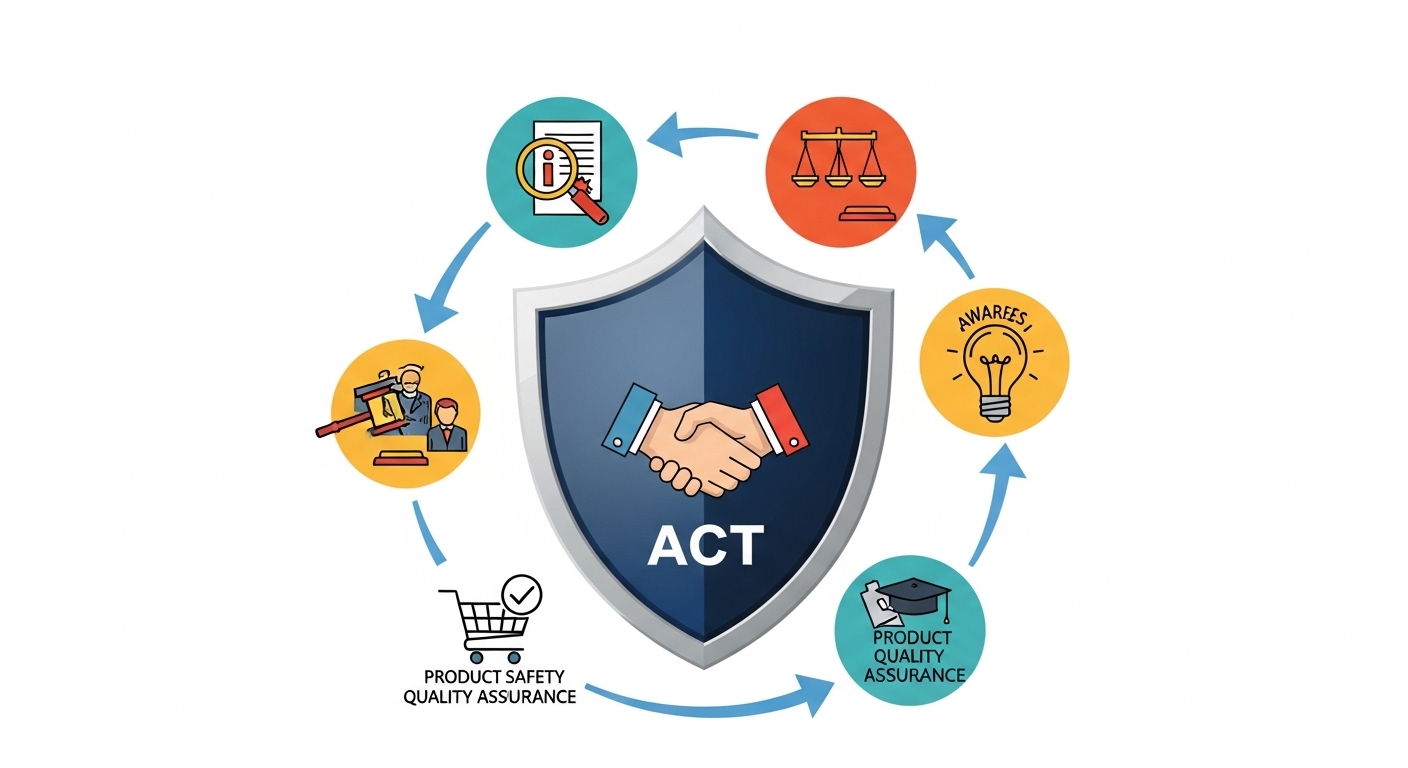
benefits of consumer protection act
Protection and rights for consumers are becoming more important in India due to the rapid growth of commerce, e-commerce, and online services. So, in this article we discuss the benefits of consumer protection act. Basically, it protects consumers from illegal trade practices and unsatisfactory goods as well as poor services.
It offers legal recourse, encourages businesses to take accountability, and fosters an open and fair market. Today we will focus on the most important advantages, features, complaint resolution mechanisms, and other support services that help customers to understand their rights and the best ways to use them effectively.
Contents
- 1 Introduction to Consumer Protection Act India
- 2 Benefits of Consumer Protection Act
- 3 CONSUMER PROTECTION – Case laws
- 4 Rights Under Consumer Protection Act
- 5 Consumer Dispute Redressal Commissions
- 6 Product Liability and E-Commerce Regulation
- 7 Mediation and Online Dispute Resolution
- 8 How to File a Consumer Complaint
- 9 Conclusion
Introduction to Consumer Protection Act India
The Consumer Protection Act (CPA) 2019 replaces the 1986 version of the act. The Consumer Protection Act has modernized consumer laws to meet the new issues. Such as electronic commerce, e-commerce platforms, and professional services. The CPA provides a framework to:
- Protection of consumer rights
- Promoting fair trade practices
- Assuring swift resolution of grievances
- Consumers and businesses can use this system to ensure transparency and accountability
For entrepreneurs who need professional guidance regarding loan financing or bank loans, services such as Project Report Service for Bank Loan and CMA Report for Banks are vital.
Benefits of Consumer Protection Act
-
Helps to get justice:
It also provides additional ways for the consumer to seek justice. For example, the Act provides for the Central Consumer Protection Authority (CCPA) to impose sanctions for false and misleading ads.
The CCPA can also prevent the advertiser who endorses misleading ads from recommending their products for a single-year period. The Act also protects against contracts that are unfair.
-
Ensure product liability
For the first time ever, product liability is included in the protection of consumers. That is why it is considered a benefit of consumer protection act. The addition of a product liability provision can deter both suppliers and manufacturers from providing defective products or services that are not up to par.
-
Faster resolution of cases Timely disposal of cases
The Act allows for mediation. It will allow for the quick resolution of cases and lessen stress for consumers. Protection expanded It also covers emerging sectors like e-commerce within its ambit.
-
Flexibility for consumers
The complaint used to have been filed by a customer only at the point of purchase or the address where the seller maintains a registered office. The new law allows consumers to lodge a complaint at the address of his work or residence. The new act also allows those involved in a consumer dispute to obtain a hearing using video conference.
CONSUMER PROTECTION – Case laws
- Ranganathan in a case against Standard Chartered Bank : The bank hired thugs to collect arrears from a complainant, despite his instruction to collect the debts from the accounts maintained by the bank. It was the Tamil Nadu State Commission that ordered the payment of monetary compensation and condemned this “mafia mentality” in a multinational bank.
2. Cadbury India Limited v. The Director of Food Safety, Tamil Nadu: The issue was the presence of insect larvae in a few chocolate bars produced by Cadbury India Limited. It was discovered that the Tamil Nadu Food Safety Department demanded a recall of product that was contaminated and also handed down a fine to the company. But Cadbury opposed the recall in the court. The court decided in favor of the department responsible for food safety and found Cadbury was responsible for promoting products that were dangerous to consume.
Rights Under Consumer Protection Act
Consumer rights are the crucial topic on which the Indian government passed the Consumer Protection Act, 2019. This act provided six fundamental consumer rights, which are:
- Right to Safety
- Right to Information
- Right to Choose
- Right to Be Heard
- Right to Redress
- Right to Consumer Education
These kinds of rights give consumers the ability to seek justice in the event of complaints.
Consumer Dispute Redressal Commissions
The law provides the following commission levels:
district (Forum)
State-level (Commission)
National level (Commission)
Also, depending on location and financial value, one can make an appeal at the proper forum. In addition, the next higher ‘Forum’/’Commission’ accepts appeals from the lower Forum.
This District Consumer Disputes Redressal Forum (DCDRF), which is often referred to as the ‘District Forum,’ was established by the relevant State Government in every District within the State. The state government can set up several district forums in a district. It is a district-level court that handles cases that can be worth up to 50 lakhs.
State Consumer Disputes Redressal Commission (SCDRC): It is the State Consumer Disputes Redressal Commission (SCDRC), sometimes referred to as the ‘State Commission,’ established in the state by the State Government concerned in the State. It is a state-level court for redressing consumer disputes. It has the power to decide on cases of more than 50 lakhs, but with a limit of 2 crore rupees.
National Consumer Disputes Redressal Commission (NCDRC): The National Consumer Disputes Redressal Commission (NCDRC), which is also referred to as the National Commission’ was established through the Central Government. Consumers’ disputes that exceed 2 crore rupees.
Consumers may use these forums based on the validity of the claims. Online complaint submission and electronic filing are now available to facilitate your request.
Product Liability and E-Commerce Regulation
The Consumer Protection Act also contains provisions on product liability and holds the manufacturers as well as service providers and online retailers accountable for the quality of their products or unfair business practices.
Startups and companies that are registered with the Startup India Registration must comply with these guidelines to avoid penalty.
Mediation and Online Dispute Resolution
The act encourages mediation cells, which allows for quick resolution of disputes without the need for lengthy court proceedings. Business and consumer alike can settle disputes peacefully, which saves time and money.
How to File a Consumer Complaint
Follow the steps below for filing a case at a the consumer court of India:
1) Issuance of Notice
Consumers (complainants for the purpose of a consumer dispute) must send a written notice to the seller or the service supplier (opposite participant for the case of the consumer) who has provided defective goods or services. The notice should state the intention to file a claim if the opposing side fails to address the defect or problem or if compensation isn’t given.
2) Make Draft of the Complaint
If the service or trader provider is unwilling to correct the problem in the product or services or to compensate following receipt of the notice, the consumer must write a formal complaint to be filed in any appropriate court for consumers pursuant to the Consumer Protection Act, 2019. The complaint must include the following information:
- Name, description, and the addresses of both the complaining party and the opposing side.
- Action cause (reason to file the case) and the most probable date, hour, and location.
- Relevant facts and events that relate to the reason for the cause of.
- The claimant is seeking relief or a remedy. the complainant.
- Signature and verification of the complainant’s signature and verification.
3) Provide Relevant Documents
The copies of any documents pertinent to the matter and substantiating the claim against the opposing side must be included with the complaint filed by a consumer. The documents that are needed include:
- Copy of the bill or receipt.
- Record of online reservation of services or goods
- Guarantee or warranty certificates If there is any
- The notice in its entirety that was sent to the other person
4) Filing of the Complaint
The complainant has to make three sets of complaints, along with supporting documents, in the proper consumer court (District, State, or National Commission). If the value of the products or services against the matter in which the case has been filed is less than Rs.50 lakh. Then the complaint should be filed with the District Commission.
If the price of the products or services is greater than Rs.50 lakh but less than Rs.2 crore. The case is required to be filed with the State Commission. If the value of the product or service exceeds Rs.2 crore, the report should be submitted to the National Commission.
5) Payment of Court Fees
The court fee is required to be paid to the office of the consumer court when making the complaint. The amount of court fees is based on the amount of products purchased or the services paid as well as how much compensation or relief is sought.
6) Submission of an Affidavit
The complainant has to submit an affidavit in the consumer court that states that the facts and statements that are presented on the record are accurate as well as true to the greatest extent that they know.
Consumers may also submit an online complaint about a service or trader via the National Consumer Helpline website prior to filing an appeal in the court for consumers. Your complaint is recorded and then sent to the trader or service provider to resolve the issue, instead of having to go to the court.
Conclusion
The benefits of consumer protection act we have already discussed above. But the foundation of contemporary business law ensures the protection of consumers. Also encouraging ethics in business deals. The startups, entrepreneurs, and MSMEs should be aware of the law. Where they are going to be working to stay in compliance, create trust, and avoid disputes.
A really good blog and me back again.
每天都在战争,希望2026和平.