
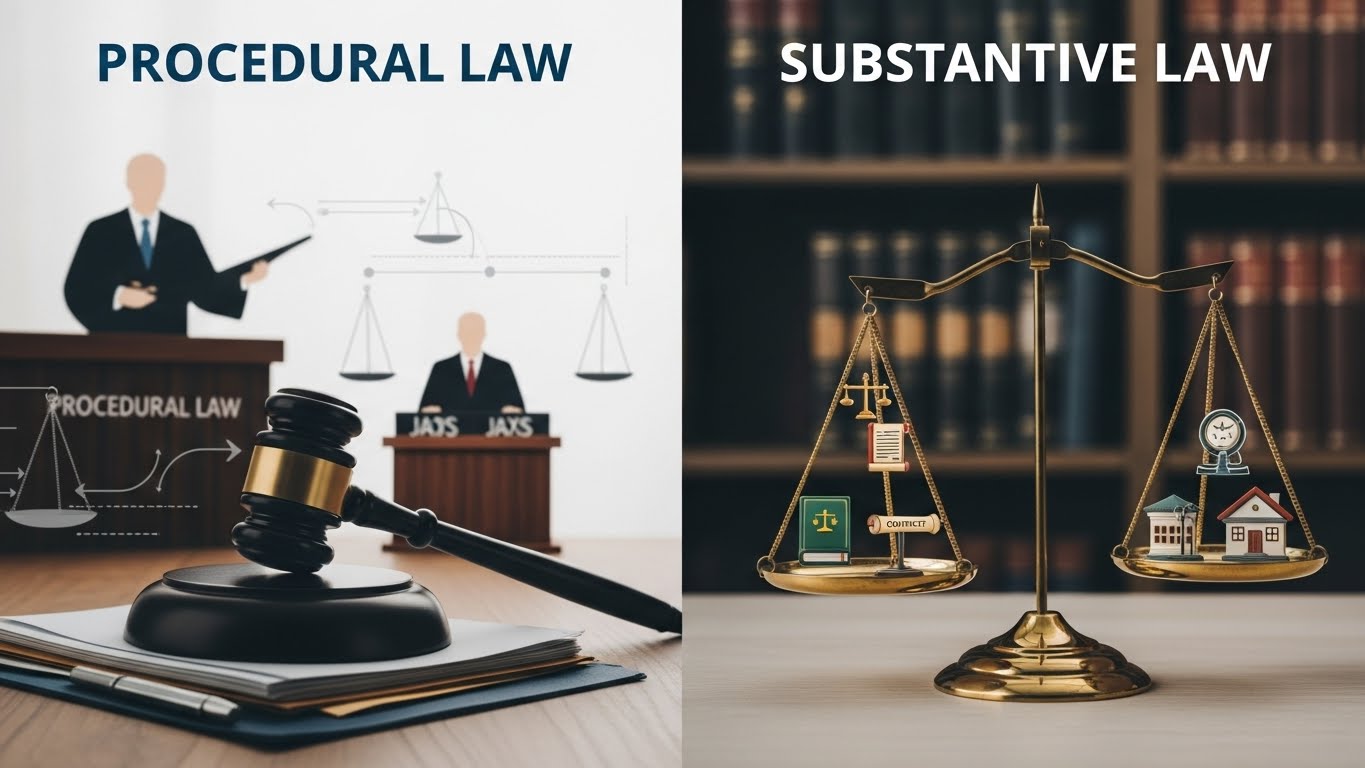
Every nation utilizes its own values to ensure the legal system within the borders of its territory. The laws are generally separated into two groups which are substantive law and procedural law.
The laws that define individuals’ rights, obligations and obligations are referred to as substantive laws. The purpose in procedural law is safeguard the rights and responsibilities that are outlined by substantive laws.
Because there is no legal authority to apply without substantive law These two laws are crucial in ensuring peace and order within a society. In addition, the right cannot be enacted in the absence of a procedural statute. This helps in defining the rights and obligations in the society.
Therefore, the difference between procedural and substantive law will be addressed throughout this essay. This is an important topic which is covered in both a judicial test and a law school. Make sure to send this article to your acquaintances if you like it.
What is Substantive Law
Substantive law is the area of law that defines laws, defines, and regulates rights as well as obligations and obligations. In essence, it spells out what actions are punished, what rights a person can enjoy and the obligations that the law places on them.
For instance:
The Bhartiya Nayay Sanhita, 2023 that has replaced the Indian Penal Code of 1860 It is an actual law that defines the various crimes, like murder, rape, or extortion and the associated punishments.
The category also covers also the Indian Contract Act, which sets out the rules for contracts and their validity, as well as remedies for violations of contracts who can sign contracts, and when they’re invalid or invalid, etc.
Define Procedural Law?
The procedural law is the mechanism or procedure needed to protect substantive rights. It’s also known as adjectival legal or remedial. It regulates the way the legal institutions and courts operate.
For instance:
The Code of Civil Procedure 1908 sets out the procedure to file a complaint, providing evidence, and making an order, making it a procedural law.
The Code of Criminal Procedure 1973 and later changed by the Bhartiya Nagrik Suraksha Sanhita in 2023 defines the procedures for investigating and summons, arrest, trials, and the punishment for criminal instances.
Differentiation between Substantive Law and Procedural Law
|
Substantive Law |
Procedural Law |
| This type of law defines rights, duties, and obligations | In other words, it’s a means to enforce right, obligations and liability |
| Defines ‘what’ of the law | Defines ‘how’ of the law |
| define the legal connections between individuals or between individuals and the government. | is the legal procedure, which includes court proceedings and the best way to start a lawsuit. |
| The result of legal proceedings may be determined by substantive laws. | The procedures and processes to be followed during legal cases are governed by the procedural laws. |
| The substantive law usually comes of the constitutional law. | It’s mainly legally enforceable, though it also contains some constitutional clauses. |
| Legal contexts are the only ones that have to be prepared in accordance with substantive law. | In both legal and non-legal settings which include litigation, rely on procedural law. |
| They are enforced through judicial decisions | The enforcement of the Judges during proceeding |
| is what determines the final outcome of the case | The judge decides on the procedure to be used in the cases. |
| The word “rape” has a substantive definition. (Contract Law, BNS/IPC, etc.) | For example, someone who is accused of “rape” has a procedural right to a speedy trial. (BNSS/CrPC, CPC, etc.) |
Case Laws
1. Hitendra Vishnu Thakur v. State of Maharashtra (1994)
The Terrorist and Disruptive Activities (Prevention) Act of 1987 was amended in this instance. It was the Supreme Court of India made an distinction between amendments’ substantive and procedural modifications, stating the first could be used retroactively, while the latter not be.
2. Thirumalai Chemicals Ltd. v. Union of India and others (2011)
The Supreme Court ruled that all laws that affect the parties who have vested and substantive rights must be read as substantive law. In contrast, any legal rule governing the form, procedure or process must be considered procedural in the sense that it is procedural in.
Conclusion
Legal procedure and substantive law comprise two different sides of the one coin. To allow the justice system to be successful both depend on each other. Procedural law provides the means to enforce rights and obligations while substantive law defines them.